

Your Guide to the Canadian EV Rebate Program: How Hyundai Electric Vehicles Qualify
Your Guide to the Canadian EV Rebate Program: How Hyundai Electric Vehicles Qualify
Posted on March 17, 2026
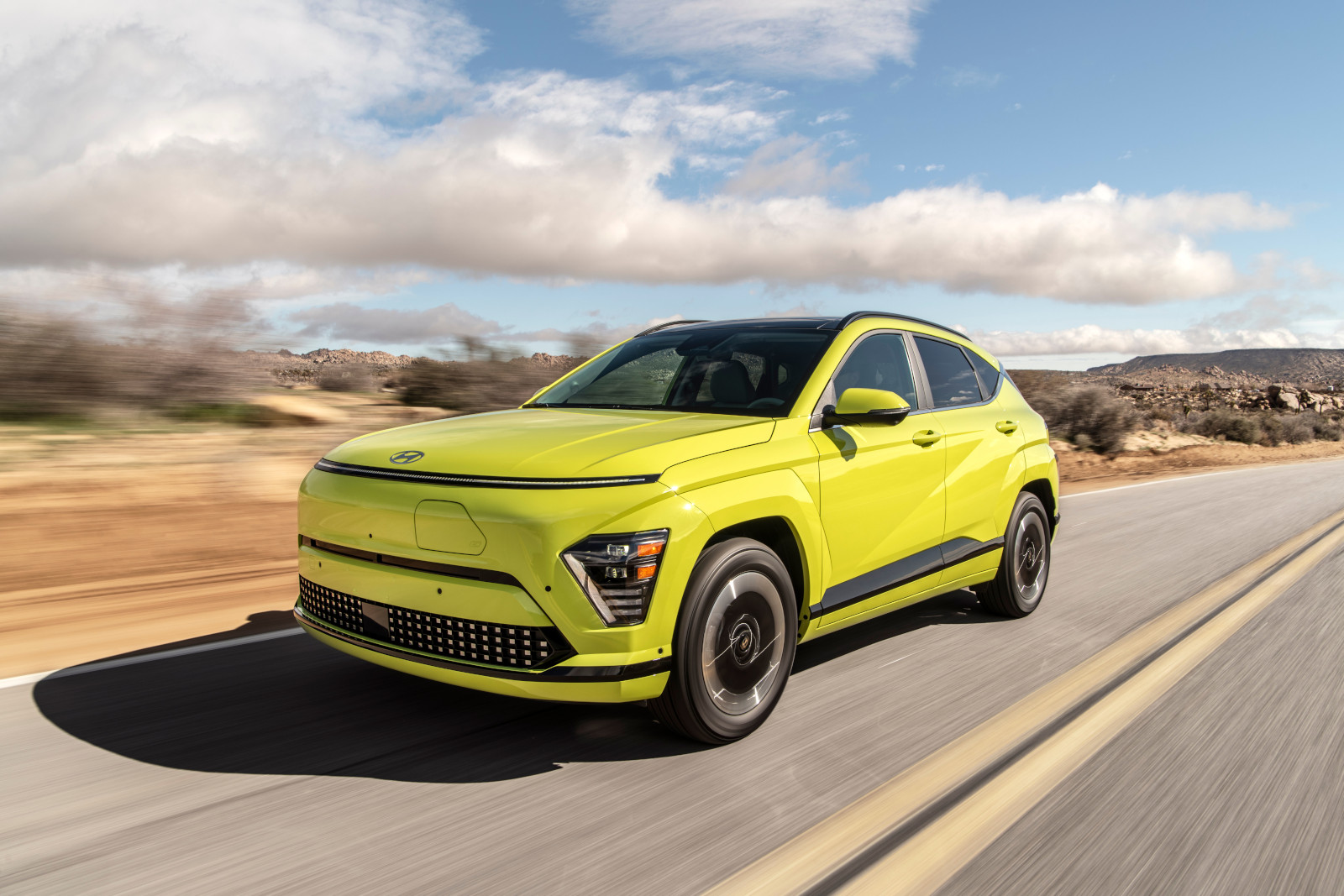
Canada's new Electric Vehicle Affordability Program (EVAP) launched in 2026 with a clear mission: make zero-emission vehicles more accessible. If you're considering a Hyundai electric vehicle, understanding how this federal incentive works can reduce your purchase cost. Here's what you need to know about EVAP eligibility, how much you can save, and which Hyundai EVs qualify.
The program offers up to $5,000 for battery-electric vehicles and up to $2,500 for plug-in hybrids purchased or leased on or after February 16, 2026. Unlike the previous iZEV program, EVAP focuses on the final transaction value - not the manufacturer's suggested retail price. This distinction matters when evaluating which vehicles qualify.
How EVAP Works: Final Transaction Value Explained
EVAP's eligibility hinges on a single threshold: your vehicle's final transaction value must not exceed $50,000. This amount includes the base price plus all options, packages, and accessories you select. Destination fees, winter tires, and certain dealer-installed accessories are excluded from this calculation.
For Canadian-made EVs, there is no transaction value cap - these vehicles qualify regardless of price. Hyundai's electric lineup includes models built in South Korea and imported under free trade agreements, so the $50,000 threshold applies.
The incentive amount depends on powertrain type. Battery-electric vehicles (BEVs) receive up to $5,000, while plug-in hybrids (PHEVs) receive up to $2,500. These amounts will decline gradually through 2030 as the program winds down, so the highest incentive amounts are available now.
EVAP Eligibility Criteria
To qualify for EVAP, a vehicle must meet several requirements. It must be new (or a demonstrator with under 10,000 km), highway-capable with at least four wheels, and manufactured in Canada or a country with a Canadian free trade agreement. The vehicle must also meet all Canadian Motor Vehicle Safety Standards.
Importantly, only dealerships can submit EVAP applications - buyers cannot apply directly. When you purchase or lease an eligible EV, the dealership handles the paperwork through Transport Canada's online portal. Once approved, the incentive is applied directly to your sale or lease agreement after taxes and fees, reducing your upfront cost.
Individuals can receive one EVAP incentive over the program's five-year lifespan. Businesses and organizations can receive up to 10 incentives total. Eligible transactions dating back to February 16, 2026, may qualify, though the program portal officially opens April 1, 2026.
Which Hyundai EVs Qualify for EVAP
Hyundai's electric vehicle lineup includes several models that meet EVAP's eligibility criteria. Each offers distinct advantages depending on your needs.
Hyundai Kona Electric is Hyundai's most affordable entry into the EV market. The Preferred trim and Preferred with Trend Package both appear on Transport Canada's EVAP Vehicle List, indicating their base configurations fall within the $50,000 threshold. This compact SUV qualifies for the full $5,000 federal incentive.
Hyundai IONIQ 5 offers extended-range capability with its 84.0 kWh battery. The Preferred Long Range trim is available in both RWD (168 kW, 225 hp) and AWD (dual-motor, 320 hp) configurations. While the base RWD model may qualify depending on final transaction value, adding packages or AWD could push the price above the $50,000 cap. The IONIQ 5 features ultra-fast 800V charging, NACS port compatibility, and a spacious interior. Qualifying configurations receive up to $5,000.
Hyundai IONIQ 9 is Hyundai's three-row electric SUV launching in June 2026. The Essential RWD trim starts at $59,999, which exceeds the $50,000 EVAP threshold. This vehicle does not qualify for the federal incentive under current program rules. The IONIQ 9 features a 110.3 kWh battery, seating for up to seven passengers, and an estimated 539 km of range on the base RWD configuration.
Plug-In Hybrids: Tucson PHEV
Hyundai offers a plug-in hybrid option that qualifies for EVAP's $2,500 incentive tier.
Hyundai Tucson Plug-In Hybrid is available exclusively on the top trim. It combines a 1.6L turbocharged engine with electric motors for 268 hp combined output and 271 lb-ft of torque. The Tucson PHEV features all-wheel drive and a 6-speed hybrid automatic transmission. However, because the Tucson PHEV is only available on the top top trim, the final transaction value may exceed the $50,000 threshold. Verify eligibility with Cambridge Hyundai before finalizing your purchase.
How to Claim Your EVAP Incentive
The application process is straightforward. When you purchase or lease an eligible Hyundai EV, your dealership initiates the claim by submitting an Eligibility Assessment to Transport Canada. You must sign a Consumer Consent Form authorizing the dealership to apply on your behalf.
Once Transport Canada approves the application (valid for 90 days), the incentive amount is deducted directly from your final sale or lease agreement. This point-of-sale application means you receive the savings immediately rather than waiting for a rebate cheque.
The incentive amount you receive depends on when the dealership submits the Eligibility Assessment, not your purchase date or delivery date. As EVAP incentives decline annually starting in 2027, timing matters. The 2026 incentive amounts - $5,000 for BEVs and $2,500 for PHEVs - represent the program's highest values.
Understanding EVAP Eligibility
To ensure you qualify for EVAP, keep your final transaction value below $50,000. This means aware of how option packages and accessories affect your final transaction value. For example, if a Kona Electric Preferred trim with a technology package and winter tires totals $49,800, it qualifies. Adding a sunroof package that pushes the total to $50,500 disqualifies the vehicle.
Destination fees and certain dealer-installed accessories are excluded from the final transaction value calculation, providing some flexibility. However, factory-installed options and packages count toward the threshold.
Buyers should also verify that their chosen configuration appears on Transport Canada's EVAP Vehicle List or meets the program's eligibility criteria. While the list includes models with MSRPs of $50,000 or less, vehicles not on the list can still qualify if the final transaction value remains compliant.
The Bottom Line
EVAP makes Hyundai's electric vehicle lineup more affordable for Canadian drivers. The Kona Electric and certain IONIQ 5 configurations qualify for the full $5,000 incentive, while the Tucson PHEV may be eligible for $2,500 depending on final transaction value. Understanding the final transaction value threshold and working with your dealership to confirm eligibility on your preferred configuration.
Visit our team at Cambridge Hyundai to explore Hyundai's electric vehicle lineup and learn how EVAP can reduce your purchase or lease cost. Our sales specialists will help you configure a vehicle that meets both your needs and the program's eligibility requirements.